The Clay and the Hands
I've been meeting with my maker in a whole new way.
I don’t know how to start this essay. I only know it’s important—like, really, really important. It is for me at least.
This thing I need to write about—it changes everything for me.
Maybe if I just start in the simplest place, it will reveal itself for you, the way it did for me. I’ve started painting as a form of stress release.
I needed something that didn’t have to be “perfect.” The messier the better, actually. It’s my way of giving the middle-finger to the perfectionism that is ruining my life. A few weeks ago I wrote a little bit about my struggle with perfectionism, where I briefly touch on the quick fixes I’ve implemented to manage my ADHD and its impact on my job and livelihood, but I only scratched the surface. I don’t even know how to begin to describe the tailspin of utter agony a simple mistake causes me.
Please understand that this isn’t something that developed because my parents or family demanded it of me. I’m actually still unraveling the mystery of its heinous origins, but I believe perfectionism, for me, is a collection of misguided beliefs and misunderstandings I’ve gathered and carried with me since childhood.
A church sermon filled with hell-fire and brimstone while visiting with a friend. Maybe a classmate laughed at me for misunderstanding something. Deep shame because I repeated words I heard, but didn’t fully understand. These are just a few generalized examples of my personal experience interacting with the world around me, and again they barely scratch the surface of the full truth.
And that is just my own personal story. Every person you know has been touched by excessive shame and sorrow—you can’t live and not experience it. I’m starting to think shame is a deceptively unlocked cage of conformity, and we are all living inside of one.
I always wanted to be able to draw well, but I could never properly control my hand, or make the thing I saw in my brain hit the page or canvas. Even my handwriting is so bad, those closest to me tease me about it. A former supervisor once told me my handwriting resembled a form of Middle-Earth Dwarvish—something that would impress Tolkien. Go ahead and laugh—it’s hilarious. Believe it or not, I’m pretty good-natured about my shortcomings. I have zero desire to actually be perfect and I’m the first person to check my own mirror to see what truly needs to be fixed.
I just wish it were safer to exist that way.
That’s why I like rules and plumblines. Rules are safe. Doing the right thing keeps you out of trouble. Dot the “i” and cross the “t.” Go to class. Turn your homework in on time. Show up. Say “yes.” Be the person others can rely on. Be quiet and small enough, and no one will even notice you. Before you know it, you’ve built your whole identity around pleasing people and pretending to be something—anything—other than your true self.
I have done that for most of my life. I’ve worn mask after mask, and played all the parts. I found safety in assuming the role of whatever anyone I knew needed me to be. Until I couldn’t anymore.
When my dad died, the mask slipped. All I had then were the rules. And that worked fine until God started pointing out all the area rugs of belief I’d collected and casually placed under my own feet to cover up the proverbial holes in the foundation of my identity. And one by one, He has been pulling them out from under me—not to punish me—but because a plumbline fix will no longer do.
It’s time to start over.
I’ve spent my entire adult life doing what was expected of me and what I thought made everyone else’s lives easier. Meanwhile, no one was being Mack.
Mack isn’t afraid of hard work. Mack isn’t afraid to go back to the drawing board and find a better way. She wants to understand things deeply, and she also wants to be understood. I’ve always struggled to say the right words at the right time, so maybe that’s why I prefer writing to speaking. Writing lets me say exactly what I mean, when I mean to say it.
And when I was young, I danced. I could express emotion through movement and not even have to use words to express what I was feeling. If I could control an activity, it was a safe activity. I could control my body. I could strengthen my body, and I could learn the steps so well, there was no way I’d forget them or mess them up. Or be too much.
My nervous system is no longer cooperating with that plan of action.
My muscles are so tense I can’t fully breathe. I recently experienced uncontrollable hives for upwards of six months. I grind my teeth constantly without noticing. I forget what I’m doing in the middle of a task. I have migraines that cause vision disruption.
I try to rationalize where this is coming from. I convince myself that I’m just afraid if I make another mistake, I’ll lose my job, and won’t be able to provide for my family anymore. And, that makes me prone to even more mistakes. Pride whispers words like weakness to me in those moments. The truth is I’ve done this job long enough that my mistakes don’t come off as incompetence. My supervisors see this for exactly what it is. Extreme burnout, anxiety, and fear.
Why now, though?
Well, I think the stress I’ve been feeling could be a result of something far more terrifying. A deeper fear of being seen, which essentially just hands a megaphone to my perfectionism.
Hey Mack, everyone is going to laugh at you and think you’re ridiculous.
They’re going to tell you that you’re stupid and don’t know what you’re talking about.
They’re going to tell you your theology is bad and you’re going to Hell.
Could this be the underlying thread of what’s really going through my head when I make a mistake? Pride attempting to punish me even further, for simply becoming a version of myself that hears her shepherd’s voice calling from a new direction. Because on one hand, I feel so much shame and sadness for not being able to do my job as well as I used to—I’m grieving my career as I knew it.
On an entirely different level, I’m terrified of what I think God is shaping me into and where He’s asking me to go.
“We read and write poetry because we are members of the human race. And the human race is filled with passion. And medicine, law, business, engineering, these are noble pursuits and necessary to sustain life. But poetry, beauty, romance, love: these are what we stay alive for.”
I forget sometimes that I am clay in His hands.
I forget sometimes that I am alive for more than sustenance.
Which brings me back to painting, and how I like it because I don’t have to be perfect at it. No one is there to tell me I screwed something up, because you can’t force art into submission of worldly whims. You participate in its becoming. You steward it. You let it reveal itself to you.
At first it’s colors on a page. No order. No rhyme or reason. No rules. Just freedom. Before I know it, the symbols in my head become stories on a canvas. Much like words that unravel from my brain when I’m writing, the story reveals itself in the art.
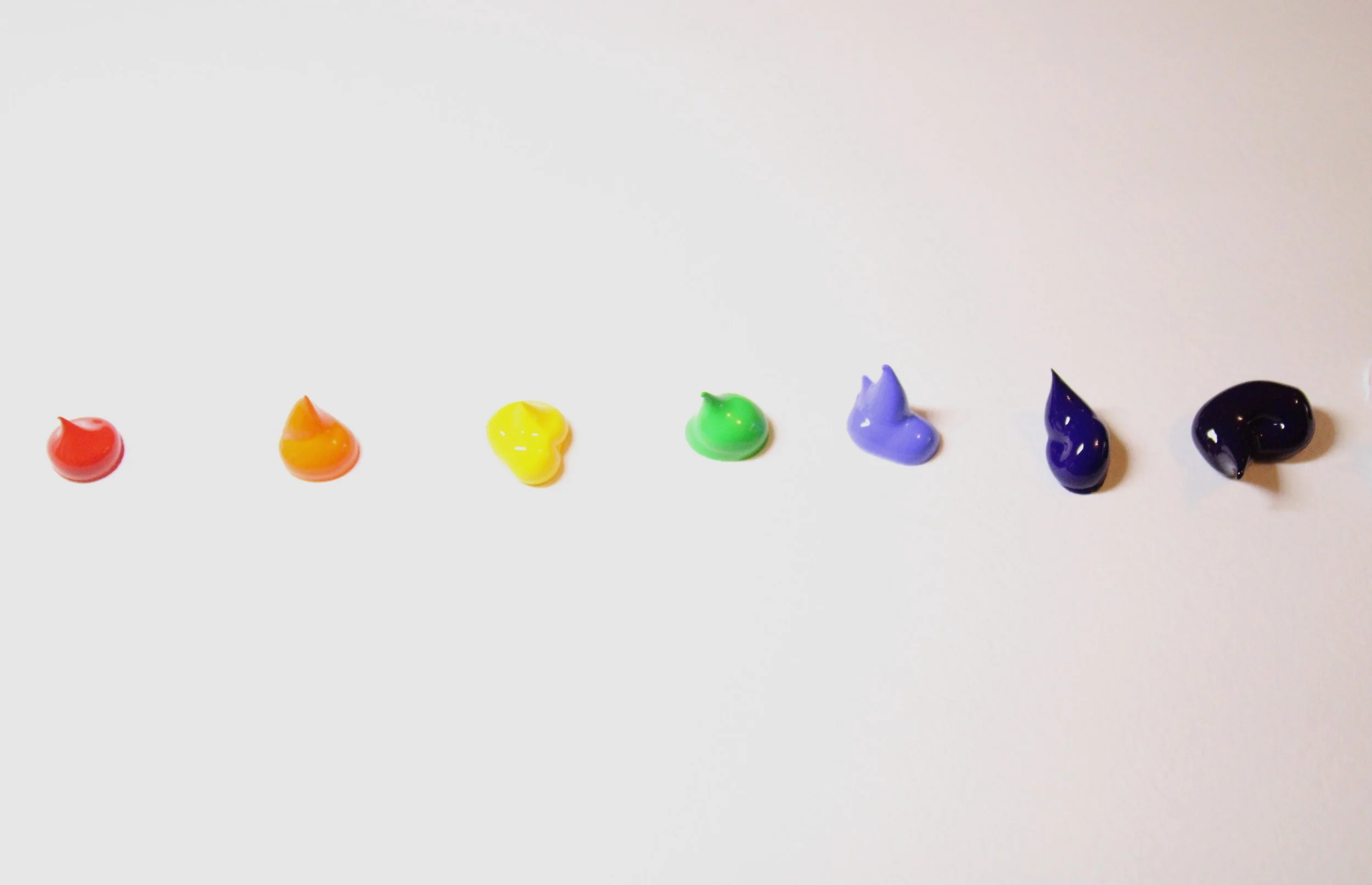
Okay, maybe some order is okay.
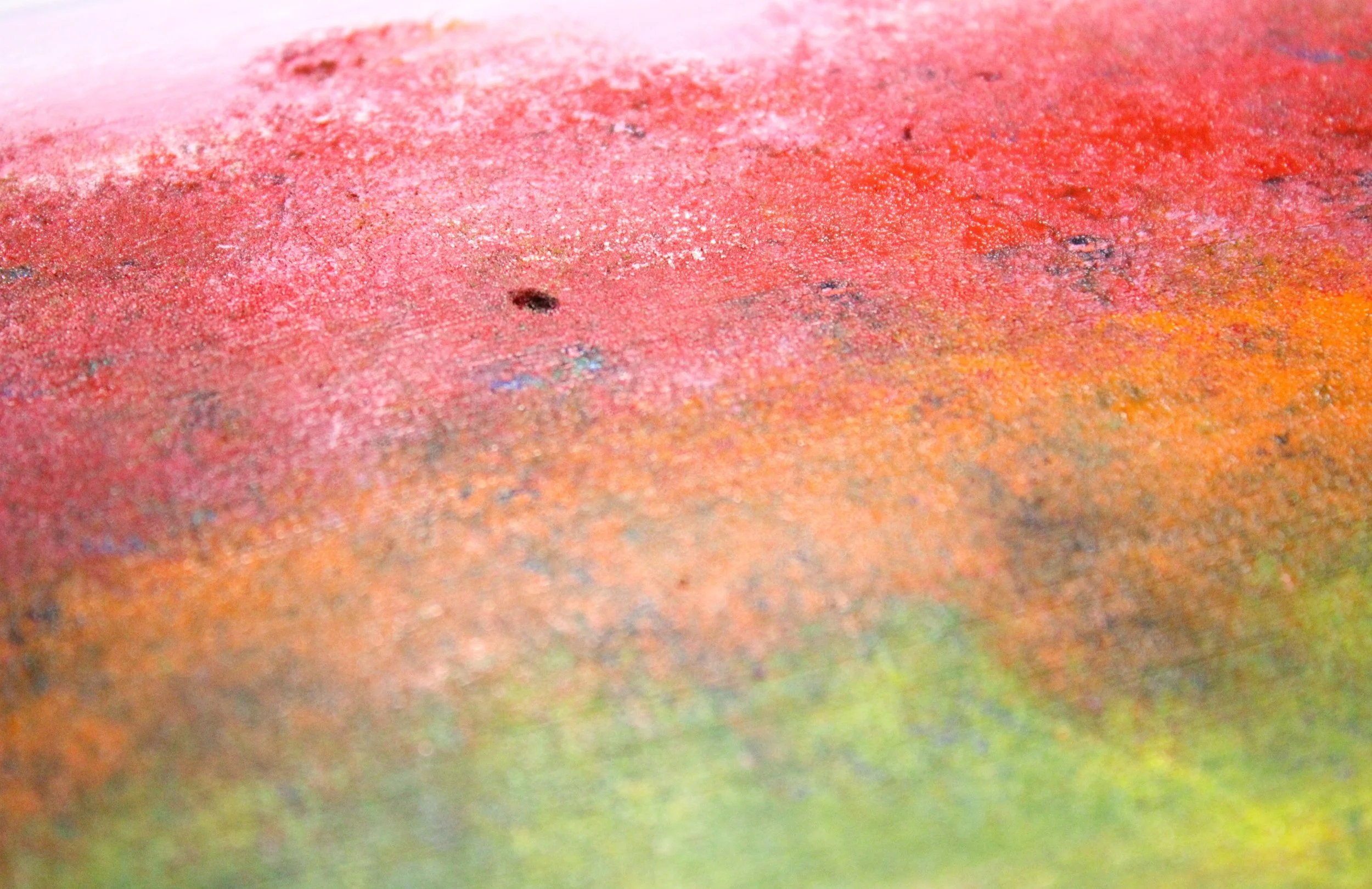
Did I ruin it?
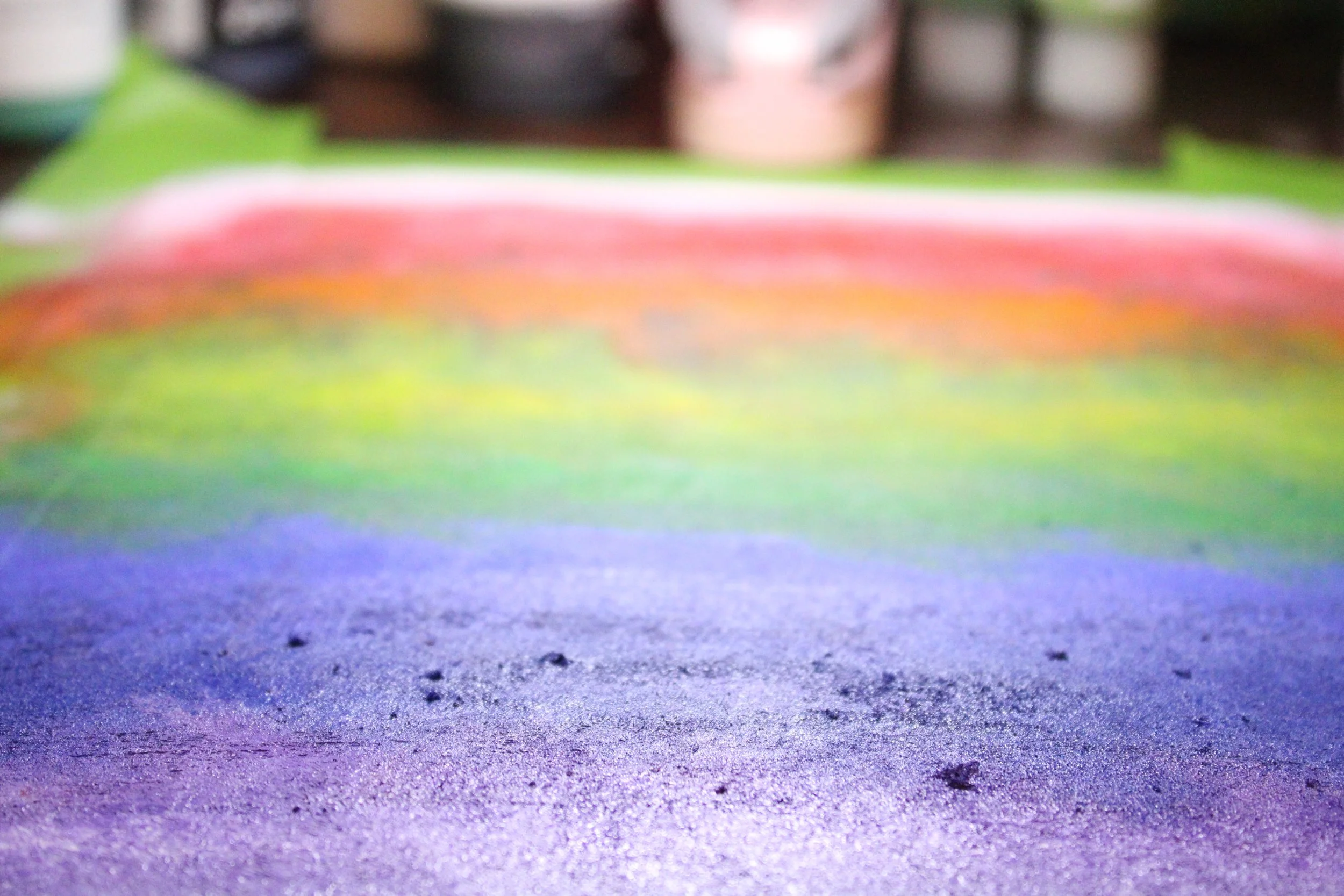
What is that? Is this okay?
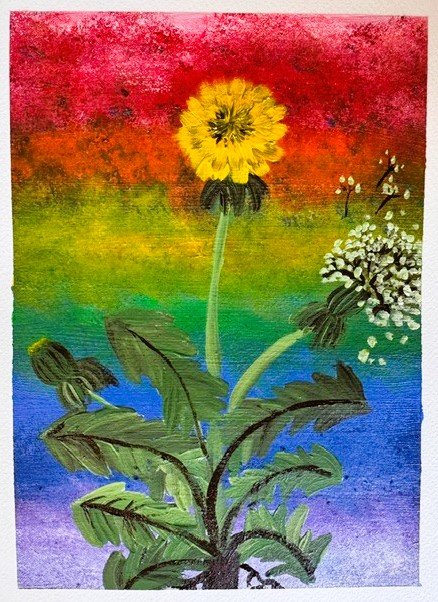
Do I care that it’s kinda wonky and disproportionate?
Not even a little bit.
Middle-finger to perfectionism, remember?
And it’s in those moments, when a story comes alive through hands that are no longer trying to control it, that I finally understand free will. And grace. And the unfathomable kindness of my God.
What started to grow…
The wish you made for yourself…
What had the audacity to grow in spite of everything.
I thought for so long that I was defective. Behind. Slow. Disappointing.
I became so damn good at rules that I made a career out of it. And all this time, God has watched me use those masks and rules and plumblines to protect the real version of myself as she rooted deeper underground—hidden in a way, refusing to let the real me be conformed by the patterns of this world. And like a painter with a brush, or a writer with a pen—a sculptor with a knife, God has been cutting away, covering over, editing out, all those old beliefs.
God is participating in my becoming—stewarding me.
And He’s letting me reveal myself to you.